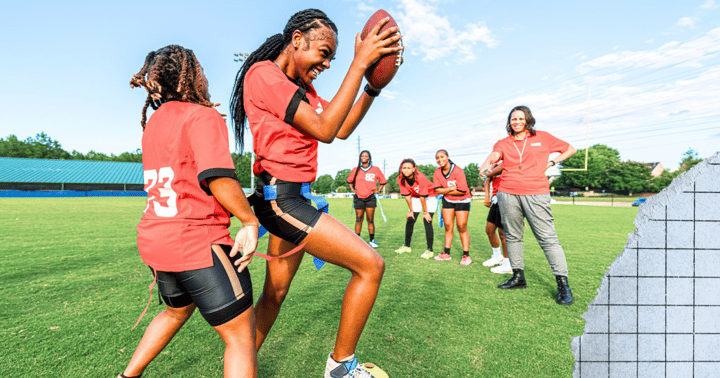
How to get every coach through required training before the season starts

| 9 min read

Your season kickoff is just a few weeks out. Now, you find that some of your coaches finished their training weeks ago, a few never opened your emails, and the rest are stuck halfway through one of the required modules. The next few days look like a lot of texting.
Getting every coach cleared and certified before the season is often a process problem, and one that adds a lot of manual chasing and checking to your day. But like any process, it can be fixed and refined.
The short answer: how to track coach certifications
- List every required course for each coaching role: These come from your governing body, your state, and your own policy.
- Set an internal deadline at least two weeks before your season starts: Missing this deadline gives you time to adjust.
- Assign every course the day a coach signs up: Following up with more certifications and clearances later can easily be missed.
- Give one person the follow-up responsibility: Reminders, questions, and feedback all flow to one person.
- Hold roster spots until training is complete. No training, no sidelines, no practice.
- Track expiration dates and late additions: Different trainings have different periods that need to be appropriately tracked before you miss a renewal.
Map every requirement to every coaching role
Start with a written list of what each role has to finish before working with athletes. A head coach, an assistant, and the team parent who runs warmups may each owe something different, and a coach can't finish a course that nobody told them about.
Requirements come from three places: your governing body, your state, and your own organization. Here are the ones most coaches see before a season:
| Training | Who requires it | When it's due | Time to complete | Renewal |
|---|---|---|---|---|
| SafeSport Core | Organizations under a national governing body | Before regular contact with minor athletes | About 90 minutes | Refresher every 12 months |
| SafeSport refresher | Same | Before the 12-month mark | Under 30 minutes | Annual; Core again in year five (US Soccer) |
| CDC HEADS UP concussion training | States and leagues with concussion rules | Set by your state or league | About 30 minutes, 80% on the post-test for a certificate | Set by your state or league |
| State-required courses, such as Ohio's sudden cardiac arrest course or California's mandated reporter training | State law | Set by state law | Varies | Annual in Ohio; varies elsewhere |
| Sport-specific modules | Governing bodies (USA Hockey age modules, for example) | Before roster addition | Varies | Set by the governing body |
If you're under a national governing body, SafeSport isn't optional. Leagues outside a governing body that compete across state lines still owe their adult members abuse-prevention training under federal law, though not necessarily SafeSport. A purely local league may answer only to state law, but parents and insurers will expect the training anyway. For the full list by source, see what certifications a youth sports coach needs and who needs SafeSport training.
Once the list exists, write it down by role and share it with every coach when they sign-up. That list is how you'll measure "done" and cleared later in the process.
Set an internal deadline ahead of first practice
Deadlines will inevitably be missed. No amount of process can fix this. To solve for this, pick a date at least two weeks before your season begins and treat it as the real deadline. The official deadline is the day you're out of compliance. Your internal one is the day you still have time to fix it and work with coaches and volunteers to get them cleared.
Some leagues already work this way. One regional soccer league, NKSL, asks its clubs to finish coach risk management at least two weeks before the season, and a coach can't attend a practice until every piece is approved.
Work backward from first practice. Here's the timeline we recommend:
| Weeks before first practice | What happens |
|---|---|
| 6 to 8 | Publish the requirements by role. Open coach sign-up. |
| 4 | Every course is assigned to every confirmed coach. |
| 2 | Internal deadline. Anyone not finished gets a direct call. |
| 1 | Roster lock. Only cleared coaches are on a team. |
| First practice | Final check against the roster before anyone takes the field. |
The two weeks between the internal deadline and first practice are your buffer. They cover the coach who was traveling, the certificate that didn't upload, and the assistant who signed up late. Kids will still start the season with a cleared adult on every sideline.
Assign everything the day a coach signs up
Send every required course in the same message as the sign-up confirmation. A coach who gets one link in September and another in October can easily miss one or the other.
Put the time each course takes right in the ask. "SafeSport Core, about 90 minutes. HEADS UP concussion training, about 30 minutes." A volunteer can plan two hours on a weeknight. "Please complete your trainings" doesn't provide that level of detail. This is where you can leverage your existing training documentation that you prepared earlier in the process. Education and clarity drives completion, ambiguity doesn't.
In most required cases, certifications and courses don't depend on each other, so nothing has to wait. If your organization also runs background checks, start the check the same day. It takes the longest, and the training can happen while it processes.
The same rule covers the parent who volunteers to coach the week before kickoff. They get the full list the day they say yes, not when someone remembers to send it.
Give one person the follow-up
Name one person who owns coach training for the season. When the job belongs to "the board," lack of clarity can prevent follow up, reminders, or completion information for the same training living across different inboxes and systems.
That person runs reminders on a schedule set at the start, not when they remember. One reminder a week from assignment to the internal deadline works. After your internal deadline, the reminder should become a phone call or text message. Changing the communication medium allows you to meet coaches where they are.
Watch for coaches who started and stalled. A coach who opened SafeSport, got through two modules, and closed the tab looks to be progressing, but they're no closer to the field than the coach who never started. Your owner's weekly list should separate "not started" from "started, not finished," because the second group usually needs only a nudge and a reminder of how much time is left.
Document the process you utilize for tracking and monitoring, too. Volunteer boards turn over, and the next person in the role should inherit a checklist, not a blank spreadsheet.
Gate the roster on completed training
Make finished training the condition for a roster spot. A coach who isn't done doesn't get added to a team, and a coach who isn't on a team doesn't run a practice.
Governing bodies and leagues already enforce this. AYSO doesn't permit practices or matches without a certified, trained AYSO coach. A Kansas City's youth hockey association won't add a coach to a roster until SafeSport and the USA Hockey age module are complete.
Mass Youth Lacrosse makes completion visible. Across nearly 200 towns and 3,500 volunteer coaches, every coach who finishes their compliance requirements gets a badge to wear at games. Coaches look across the field and see whether the other sideline met the same standard. "Wear it as a badge of honor," Executive Director Kevin Barney tells coaches. "You did everything. Make sure the others do."
That's personal accountability covering ground a policy can't. With 500 games every Sunday, MYL staff can't be at every field. Officials, town leaders, and coaches who know the standard notice a missing badge and report it, and the organization follows up to find out whether a coach forgot the badge or isn't cleared. Regional directors meet monthly and hold each other's towns to the same bar. Read how Mass Youth Lacrosse built its culture of safety.
The gate does the work reminders can't. Without it, a coach who's 80% done and a coach who's 100% done look the same on game day: both are on the field. With it, finishing is the only way onto the sideline.
Plan for the coach who still misses. Line up a cleared assistant or a cleared coach from another team who can cover the first practice. Kids shouldn't lose a week of the season because one adult didn't finish a module, and they shouldn't spend it with an adult who hasn't been trained to keep them safe.
Keep coaches current after opening day
A fully trained roster on opening day can fall out of compliance by midseason. Training expires, and new adults show up.
SafeSport certificates are valid for 12 months after each coach's completion date, whatever your season calendar says. A coach who trained last October lapses this October, possibly in the middle of fall league play. Record each coach's expiration date when the certificate comes in, and start reminders 30 days before it.
Then there are the adults who weren't there in week one: the assistant added in week three, the parent covering a practice, the coach who moves from one team to another. Each one goes through the same gate before their first practice, whatever the calendar says.
Check the active roster against cleared status at set points through the season, such as the start of each month. A name on a team without a cleared status is the gap to close that day.
How Ankored helps
Ankored runs this process for you. You set which training applies to each role, program, and season, and every coach gets their full list when they register. Abuse prevention, Positive Coaching Alliance, and CDC HEADS UP courses run inside Ankored. Coaches upload certificates for anything taken elsewhere, and your team approves them from one review queue. The Requirements Library has ready-made requirements to start from.
Ankored tracks every expiration date, reminds coaches before training lapses, and alerts you when someone is overdue. Two weeks before first practice, you see who's cleared, who's close, and who hasn't started, without opening a spreadsheet. See how Ankored tracks coach training and shows who's cleared before the first practice.
Frequently asked questions
Can a coach run practice before finishing SafeSport training?
Not if your organization is under a national governing body. SafeSport Core is due before an adult has regular contact with minor athletes, or within 45 days of joining, whichever comes first. For a coach, regular contact starts at the first practice.
How long does SafeSport training take?
The Core course takes about 90 minutes, and the annual refresher takes under 30, according to US Soccer. Coaches can finish the Core in one evening.
How often does coach training need to be renewed?
SafeSport requires a refresher every 12 months. State-required and governing body courses set their own renewal cycles. Track each coach's expiration date for each course, not one date for the whole roster.
What about coaches who join after the training deadline?
They go through the same steps on a shorter clock. Assign every course the day they sign up, and keep them off the roster until it's done. A cleared assistant can cover until they finish.
Do volunteer coaches need the same training as paid coaches?
Usually, yes. SafeSport applies to adults with regular contact with or authority over minor athletes, whether or not they're paid. Check your state's rules for any training tied to employment.